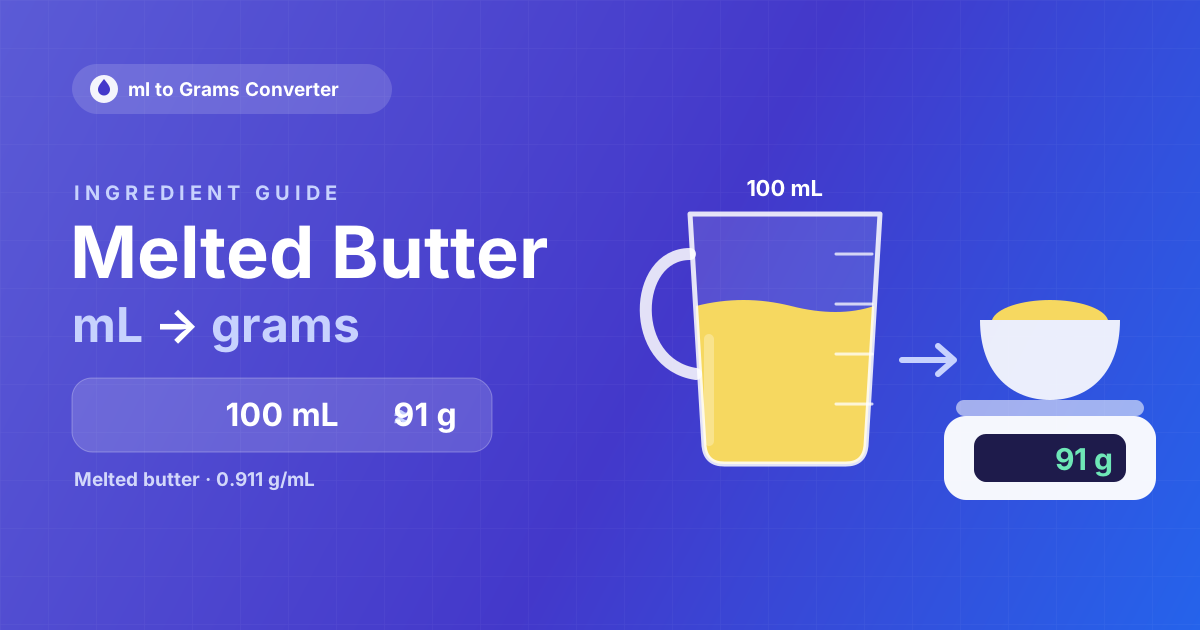
Melted butter weighs a little less than water, about 0.91 g for every milliliter, so 100 mL of melted butter comes to roughly 91 g. Every number on this page uses 0.911 g/mL and assumes the butter is fully melted and poured into a liquid measure. A tablespoon (15 mL) of melted butter is about 13.7 g, and a US cup (240 mL) of melted butter is about 219 g.
Solid butter cut from a stick behaves differently in a measure, so it has its own section further down.
Melted butter mL to grams chart
Measured state: melted butter, fully liquid and poured to the line of a clear measuring jug or spoon. Density used: 0.911 g/mL, the same value behind the Butter option in the site’s converter. Weights are rounded to one decimal below 20 g and to the nearest gram above that.
| Volume (mL) | Melted butter (g) |
|---|---|
| 5 mL | 4.6 g |
| 10 mL | 9.1 g |
| 15 mL | 13.7 g |
| 30 mL | 27 g |
| 45 mL | 41 g |
| 50 mL | 46 g |
| 60 mL | 55 g |
| 75 mL | 68 g |
| 80 mL | 73 g |
| 100 mL | 91 g |
| 120 mL | 109 g |
| 125 mL | 114 g |
| 150 mL | 137 g |
| 200 mL | 182 g |
| 240 mL | 219 g |
| 250 mL | 228 g |
| 300 mL | 273 g |
| 500 mL | 456 g |
This chart only applies to butter that has already been melted. If you are slicing cold butter along the marks on the wrapper, use the solid column in the comparison table below instead.
Melted and solid butter: same weight, different measure
Butter does not gain or lose weight when it melts. A 113 g stick is still 113 g once it has turned liquid in the pan. What changes is the way that butter fills a measuring cup or spoon, and that is where most of the confusion around butter conversions comes from.
Solid butter is almost never poured. In the US it is sliced along the tablespoon marks printed on the stick wrapper. In metric kitchens it is weighed from a block, and packs are sold by weight (250 g blocks are a common size). Some cooks press softened butter into a dry measuring cup, which is the least reliable method of all because air pockets get trapped in the corners.
USDA FoodData Central lists butter at 14.2 g per tablespoon, 113 g per stick of 8 tablespoons, and 227 g per cup. Those are wrapper-marking volumes for solid butter, and worked back to a density they come to about 0.96 g/mL. Melted butter, poured into a jug, sits at about 0.911 g/mL. So the same line on a measure holds slightly less butter when the butter is liquid than the wrapper markings imply for a solid stick.
Here is the difference side by side. Left: melted butter, poured (0.911 g/mL). Right: solid butter, measured by wrapper markings (0.96 g/mL).
| Volume (mL) | Melted, 0.911 (g) | Solid, by marking, 0.96 (g) |
|---|---|---|
| 15 mL | 13.7 g | 14.4 g |
| 30 mL | 27 g | 29 g |
| 60 mL | 55 g | 58 g |
| 120 mL | 109 g | 115 g |
| 240 mL | 219 g | 230 g |
The solid column uses this site’s 15 mL tablespoon and 240 mL cup, both a touch larger than the US measures USDA works from. That is why it shows 14.4 g per tablespoon and 230 g per cup rather than USDA’s 14.2 g and 227 g. The point of the table is the gap between the two columns, not the last gram: a cup of solid butter by the wrapper and a cup of poured melted butter are not the same amount of butter.
Why melted butter is lighter than water
Butter is roughly 80% fat, with the rest made up of water and milk solids. Fat is lighter than water, which is why a layer of melted butter floats on top of a sauce that has split. The University of Guelph’s Dairy Science and Technology eBook gives milk fat a density of 0.915 g/mL at 20 °C. Melted butter is mostly that same fat in liquid form, so it lands close to 0.91 g/mL.
You may come across charts that list melted butter at 1.01 g/mL, heavier than water, usually with the explanation that melting “removes the air”. That figure does not hold up. The main ingredient in butter is lighter than water, so butter cannot become heavier than water just by melting. If a chart tells you 100 mL of melted butter weighs more than 100 g, it is worth checking its other numbers too.
How to convert butter from mL to grams
The rule is the same as for any ingredient: multiply the volume by the density.
grams = mL × density
For melted butter the density is 0.911 g/mL, so 100 mL × 0.911 g/mL = 91.1 g, which you would round to about 91 g. For solid butter measured by the wrapper, swap in 0.96 g/mL instead: 100 mL × 0.96 g/mL = 96 g.
To skip the arithmetic, enter your exact volume and select Butter in the mL to Grams Converter. Its Butter setting uses the melted figure, so it gives the same results as the main chart on this page.
Other fats each have their own density, and they are close to butter but not identical. If you are swapping melted butter for a liquid oil by weight, look up the oil itself in the olive oil mL to grams chart or the vegetable oil conversion guide rather than reusing the butter numbers.
Spoon and cup amounts of melted butter
Most recipes that use melted butter give it in spoons or cups. The table below covers the usual sizes.
Measured state: melted butter, poured (0.911 g/mL). The site uses a 15 mL tablespoon, a 240 mL US cup and a 250 mL metric cup.
| Measure | Melted butter (g) |
|---|---|
| 1 teaspoon (5 mL) | 4.6 g |
| 1 tablespoon (15 mL) | 13.7 g |
| 2 tablespoons (30 mL) | 27 g |
| 1/4 cup (60 mL) | 55 g |
| 1/3 cup (80 mL) | 73 g |
| 1/2 cup (120 mL) | 109 g |
| 2/3 cup (160 mL) | 146 g |
| 3/4 cup (180 mL) | 164 g |
| 1 US cup (240 mL) | 219 g |
| 1 metric cup (250 mL) | 228 g |
These are poured, melted measures. For cold butter straight from a US stick, the wrapper is simpler to use: each marked tablespoon is 14.2 g and the whole stick is 113 g.
What sticks and blocks melt down to
It helps to know how much room a familiar piece of butter takes up once it is liquid. A US stick weighs 113 g. Melted, it fills about 124 mL, so a melted stick sits slightly above the 1/2 cup line on a measuring jug even though the wrapper calls it 1/2 cup. By the wrapper markings, the same 113 g counts as about 118 mL.
Two sticks, 227 g, melt to about 249 mL. That is more than a 240 mL US cup, so if you melt two sticks and pour them into a cup measure, expect a little left over. Half a stick, about 57 g, melts to around 63 mL.
Metric blocks work the same way. A 250 g block melts to about 274 mL, and a 125 g half block to about 137 mL. A 454 g block (one pound) melts to about 498 mL, just short of half a liter.
Reading recipes that say “1/2 cup melted butter”
This phrase has two possible meanings. You can melt the butter first and then pour it to the 1/2 cup line, which gives about 109 g. Or you can cut one 1/2 cup stick, melt it, and use all of it, which gives 113 g.
Comma placement is a useful hint. Many recipe writers use “1/2 cup melted butter” to mean melt, then measure, and “1/2 cup butter, melted” to mean measure solid, then melt. Not every writer follows that habit, though. The difference between the two readings is only a few grams, which rarely matters in brownies, muffins, pancakes or a crumb crust. Weighing removes the question entirely.
When a recipe gives butter in grams, use the grams and ignore any cup measure printed next to it. Metric and European recipes usually list butter by weight, and the gram figure is the one the recipe was tested with.
Worked examples
Each example below shows the multiplication so you can follow it with your own amounts.
Brownies with 1/2 cup melted butter
The recipe asks for 1/2 cup of butter, measured after melting. A US 1/2 cup is 120 mL.
120 mL × 0.911 g/mL = 109.32 g
Weigh out about 109 g of butter and melt it, or melt more than you need and pour 109 g into the bowl on the scale.
Crumble topping with 75 mL melted butter
A metric recipe calls for 75 mL of melted butter to bind oats, flour and sugar.
75 mL × 0.911 g/mL = 68.325 g
That rounds to about 68 g. Cut 68 g from the block and melt it, and there is no jug to scrape out afterwards.
Pancakes with 3 tablespoons melted butter
Three 15 mL tablespoons make 45 mL.
45 mL × 0.911 g/mL = 40.995 g
So the batter needs about 41 g of butter. Weighing it is easier than filling a tablespoon three times with hot butter and losing some to the spoon each time.
Cutting 2 tablespoons from a cold block
A savory recipe wants 2 tablespoons of butter for sautéing, and you are slicing from a block with no wrapper marks. Use the solid density this time, because the recipe writer measured solid butter.
30 mL × 0.96 g/mL = 28.8 g
Cut about 29 g. The same 2 tablespoons measured as melted butter would be about 27 g, so for a pan fry the difference is irrelevant, but the example shows which density fits which state.
Grams to mL for melted butter
Going the other way, divide the weight by the density:
mL = grams ÷ density
Use this when a recipe gives butter by weight but you only have a measuring jug, or when you want to know where melted butter should reach on the jug before you pour.
Measured state: melted butter (0.911 g/mL).
| Weight (g) | Melted butter (mL) |
|---|---|
| 14 g | 15.4 mL |
| 25 g | 27 mL |
| 50 g | 55 mL |
| 57 g | 63 mL |
| 100 g | 110 mL |
| 113 g | 124 mL |
| 125 g | 137 mL |
| 150 g | 165 mL |
| 200 g | 220 mL |
| 227 g | 249 mL |
| 250 g | 274 mL |
| 500 g | 549 mL |
A quick example: a cake recipe lists 200 g of melted butter and your scale’s battery has died.
200 g ÷ 0.911 g/mL = 219.54 mL
Melt the butter, then pour it to about 220 mL on the jug. Notice that because butter is lighter than water, the milliliter figure is always larger than the gram figure. A chart that shows 100 g of melted butter as less than 100 mL has the density the wrong way round.
Clarified butter and ghee
Clarified butter and ghee are butter with the water and milk solids removed, leaving almost pure butterfat. Changade, Tambat and Kanoje (2006) measured ghee at 40 °C and found a specific gravity of about 0.90 for cow ghee and about 0.92 for buffalo ghee. The 0.911 g/mL used here falls inside that range, so the melted butter charts are a fair estimate for liquid ghee as well.
The weight you end up with is the part that changes. Clarifying drives off the water and strains away the milk solids, so you finish with less than you started with. If a recipe gives a weight of ghee or clarified butter, weigh the finished product rather than the butter that went into the pan.
Tips for measuring butter accurately
A few habits make butter measurements far more consistent, whether you are converting a recipe or following one as written.
- Weigh it when you can. Set the mixing bowl on the scale, press tare, and add the butter directly. The gram reading is the same for solid and melted butter, so weighing sidesteps every question on this page.
- Weigh before melting. Cutting 109 g from a cold block and then melting it is quicker and cleaner than melting first and pouring to a line.
- Melt completely before measuring by volume. Half-melted butter with soft lumps in it traps air and gives a false reading on the jug.
- Use a clear liquid measure for melted butter. Read the level at eye level on a flat counter. A dry cup filled to the brim is hard to fill exactly with a hot liquid.
- Scrape the jug. Melted butter clings to the sides of a measure, and a spatula gets the last of it into the bowl.
- Do not press solid butter into a cup. Pockets of air make the amount unpredictable. Use the wrapper marks, a scale, or melt it and pour.
- Match the density to the state. Use 0.911 g/mL for melted butter and 0.96 g/mL for solid butter cut by the wrapper. Mixing them up is the most common source of small errors.
For baking where the ratio of fat to flour matters, such as shortbread or pastry, a scale is worth using for every ingredient, not just the butter. For a knob of butter in a frying pan, the wrapper markings are plenty.
Enter your exact volume and select Butter in the mL to Grams Converter to calculate any amount that is not in the charts. If your recipe uses coconut oil instead of butter, the coconut oil mL to grams guide covers it in the same melted state.
Frequently asked questions
How many grams is 100 mL of butter?
Melted, 100 mL of butter weighs about 91 g, based on 0.911 g/mL. Solid butter measured by wrapper markings works out heavier, at about 96 g for the same volume.
Does melted butter weigh the same as solid butter?
Yes. Butter keeps its weight when it melts, so a 113 g stick is still 113 g as a liquid. What changes is the volume reading, and a cup of poured melted butter holds slightly less butter than a cup measured by the marks on a solid stick.
How many grams are in a tablespoon of butter?
A 15 mL tablespoon of melted butter is about 13.7 g. A tablespoon cut from a US stick by the wrapper markings weighs 14.2 g, according to USDA FoodData Central.
How many grams is a stick of butter?
A US stick of butter weighs 113 g and is marked as 8 tablespoons, or 1/2 cup. Once melted, it fills about 124 mL.
Can I use the melted butter chart for ghee?
Yes, as a close estimate. Ghee has a specific gravity of roughly 0.90 to 0.92, which brackets the 0.911 g/mL used for melted butter, but weigh the finished ghee because clarifying reduces the amount you end up with.