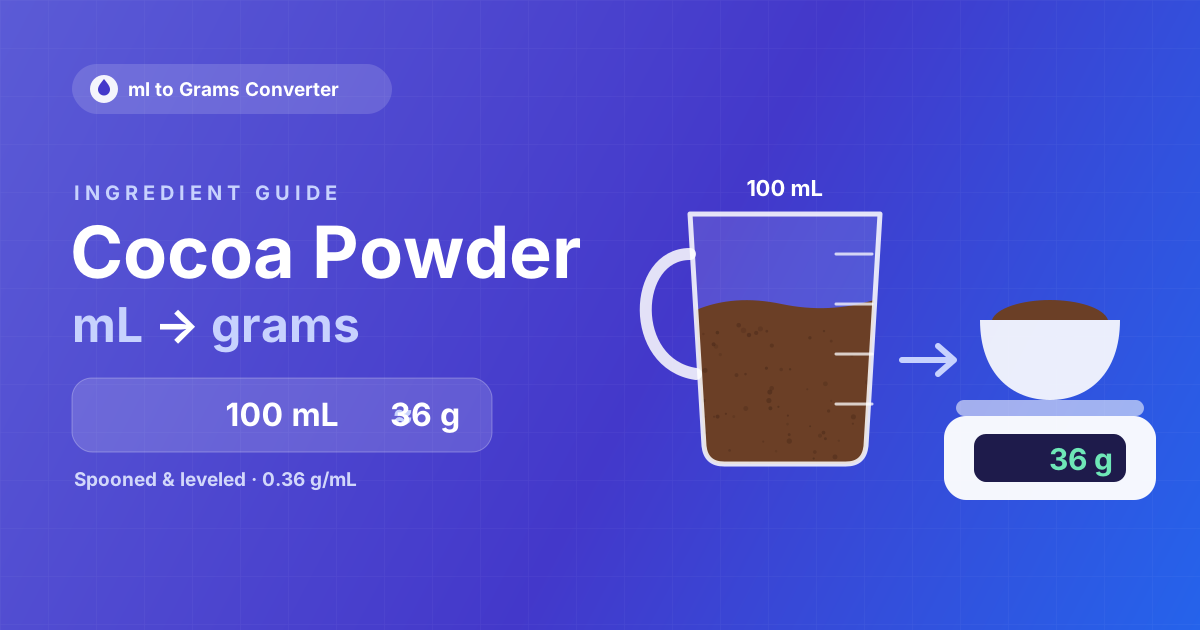
Unsweetened cocoa powder weighs about 0.36 g/mL when it is spooned into the measure and leveled, so 100 mL of cocoa is roughly 36 g. A level tablespoon holds about 5.4 g, and a 240 mL US cup about 86 g. Those figures are lighter than many online charts suggest, and 0.36 g/mL is the value this site’s converter uses for Cocoa Powder.
Milliliters measure how much space the cocoa takes up, and grams measure how heavy it is. For water the two numbers are nearly the same. Cocoa is one of the lightest powders in the baking cupboard, so each milliliter weighs only about a third of a gram.
Cocoa powder mL to grams chart
Every weight below uses 0.36 g/mL, which assumes cocoa spooned loosely into the measure and leveled with a straight edge, not scooped from the tin or pressed down. It applies to both natural and Dutch-process unsweetened cocoa and matches the Cocoa Powder setting in the converter.
| Volume (mL) | Cocoa powder (g) |
|---|---|
| 5 mL | 1.8 g |
| 10 mL | 3.6 g |
| 15 mL | 5.4 g |
| 20 mL | 7.2 g |
| 30 mL | 10.8 g |
| 45 mL | 16.2 g |
| 50 mL | 18 g |
| 60 mL | 22 g |
| 75 mL | 27 g |
| 80 mL | 29 g |
| 100 mL | 36 g |
| 120 mL | 43 g |
| 125 mL | 45 g |
| 150 mL | 54 g |
| 200 mL | 72 g |
| 240 mL | 86 g |
| 250 mL | 90 g |
| 300 mL | 108 g |
| 500 mL | 180 g |
Values under 20 g keep one decimal place because cocoa is often used in small amounts, where a gram or two makes a visible difference. Larger values are rounded to whole grams. All of them are kitchen estimates: loosely spooned cocoa can come in a touch lighter, and cocoa pressed into the measure will come in heavier.
How to convert cocoa powder from mL to grams
Multiply the volume by the density: grams = mL × 0.36. For example:
150 mL × 0.36 g/mL = 54 g
That single step is all the conversion needs. For an amount that falls between the rows above, enter your volume and choose Cocoa Powder in the mL to Grams Converter, which uses the same 0.36 g/mL value as this chart. To work backwards from a weight, divide instead of multiplying; the grams to mL section further down has a ready-made table.
Where the 0.36 g/mL figure comes from
The density is not a guess. It lines up closely with the cup and tablespoon weights published by two of the most widely used references for home baking.
| Source | Measure | Weight |
|---|---|---|
| USDA FoodData Central, natural cocoa | 1 tablespoon | 5.4 g |
| USDA FoodData Central, natural cocoa | 1 cup | 86 g |
| USDA FoodData Central, Dutch-process (alkalized) | 1 cup | 86 g |
| King Arthur Baking | 1/2 cup | 42 g |
USDA FoodData Central lists a tablespoon of unsweetened cocoa at 5.4 g and a cup at 86 g, which works out to about 0.36 g/mL. The chart on this page gives exactly the same tablespoon weight and the same 86 g for a US cup. King Arthur Baking puts half a cup at 42 g, or 84 g per cup, only a gram or two away from the chart’s figures.
When a government nutrition database and a major baking company arrive at nearly the same numbers by different routes, you can treat them as a sound basis for kitchen measuring.
Why some charts say cocoa weighs more
Search for a cocoa conversion and you will find charts that use about 0.5 g/mL. That figure is not wrong in itself, but it describes something different. Cocoa suppliers list a bulk density of around 0.5 g/mL for cocoa that has settled or been tapped down in a container. It is a figure for shipping and storage, not for a spoon in a mixing bowl.
Apply that bulk figure to a recipe that was written with spooned cocoa and you end up with roughly 40% too much cocoa. The result is a cake that bakes up dry, a brownie with a bitter edge, or a frosting that tastes more of cocoa than of chocolate. If a chart’s cup of cocoa weighs far more than about 86 g, it is almost certainly using a packed or bulk value rather than a spooned one.
Natural and Dutch-process cocoa
Both types are unsweetened cocoa powder. The difference is processing: Dutch-process cocoa has been treated with an alkali, which is why USDA lists it as “alkalized”, while natural cocoa has not. Recipes usually name the type they were developed with, but for measuring purposes the two behave the same way.
USDA gives identical figures for both: 5.4 g per tablespoon and 86 g per cup. There is no documented kitchen difference in weight per mL between them, so use the same chart and the same converter setting for either. Use whichever type the recipe asks for, and convert it with 0.36 g/mL.
Brands can still differ slightly in how fine and fluffy the powder is, and a finer or clumpier cocoa may settle differently in a spoon. That difference is small compared with the effect of scooping or pressing, covered next.
Sifted, spooned or packed: what happens in the measure
Cocoa is very light and airy, and it compacts easily under pressure. That combination makes it one of the least predictable ingredients to measure by volume.
- Scooping from the tin pushes the measure into powder that has already settled, and the edge of the cup presses more cocoa in as it goes. This can add a lot of weight compared with the chart.
- Pressing or tapping the spoon to level it squeezes out air and lets more cocoa in. Even a couple of taps on the counter will increase the weight.
- Spooning and leveling gives the chart values. Spoon cocoa into the measure until it mounds, then sweep it flat with the back of a knife.
- Sifting adds air, so a cup of cocoa that has been sifted before measuring weighs less than the chart shows.
Cocoa also clumps easily. Those small, hard lumps are why so many recipes tell you to sift it, and they are another reason a spoonful straight from the tin varies in weight from one scoop to the next.
Reading “sifted” in a recipe
The position of the word “sifted” changes the amount. “1 cup cocoa, sifted” means measure the cocoa by spooning and leveling, then sift it into the bowl, so the chart applies. “1 cup sifted cocoa” means sift first and then measure the sifted powder, which gives a lighter cup than the chart. When a recipe gives the weight in grams as well, follow the grams and the question goes away.
Cocoa powder is not hot cocoa mix
Drinking chocolate and hot cocoa mix contain sugar along with cocoa, and they weigh differently by volume. None of the numbers on this page apply to them. If a recipe calls for cocoa powder, use plain unsweetened cocoa. If you are converting a hot chocolate mix, check the weight printed on the packet instead.
Cocoa powder by the spoon and cup
Recipes often measure cocoa in tablespoons for frostings, sauces and drinks, and in cups for cakes and brownies. The table covers both, using a 5 mL teaspoon, 15 mL tablespoon, 240 mL US cup and 250 mL metric cup.
| Measure | Cocoa powder (g) |
|---|---|
| 1 teaspoon (5 mL) | 1.8 g |
| 1/2 tablespoon (7.5 mL) | 2.7 g |
| 1 tablespoon (15 mL) | 5.4 g |
| 2 tablespoons (30 mL) | 10.8 g |
| 1/4 cup (60 mL) | 22 g |
| 1/3 cup (80 mL) | 29 g |
| 1/2 cup (120 mL) | 43 g |
| 2/3 cup (160 mL) | 58 g |
| 3/4 cup (180 mL) | 65 g |
| 1 US cup (240 mL) | 86 g |
| 1 metric cup (250 mL) | 90 g |
The small amounts are where cocoa is most often misjudged. A heaped tablespoon can hold far more than the level 5.4 g, and in a small batch of frosting that is enough to change both color and taste. If a recipe was written with a metric cup, use the 90 g row; for a US cup, use 86 g.
Worked examples from everyday recipes
Each example applies grams = mL × 0.36 to a typical recipe amount.
Brownies with 1/2 cup of cocoa. A US half cup is 120 mL.
120 mL × 0.36 g/mL = about 43 g
Weigh 43 g of cocoa, and remember that pressing the powder into the cup would push it well past that.
Chocolate cake with 3/4 cup of cocoa. Three-quarters of a US cup is 180 mL.
180 mL × 0.36 g/mL = about 65 g
Cake is where extra cocoa most often shows up as dryness, so this is a good amount to weigh.
Hot chocolate made from cocoa, 2 tablespoons per mug. Two tablespoons is 30 mL.
30 mL × 0.36 g/mL = 10.8 g
Sweeten it separately, since unsweetened cocoa contains no sugar.
A metric recipe with 250 mL of cocoa.
250 mL × 0.36 g/mL = 90 g
For recipes from countries that use the metric cup, this is the figure to reach for.
Chocolate frostings usually pair cocoa with powdered sugar, which has its own density and its own packing rules. The sugar mL to grams guide covers powdered, granulated and brown sugar. Cocoa is also much lighter by volume than the flour it is usually mixed with, so do not reuse one chart for the other; the flour mL to grams chart has the flour values.
Converting cocoa grams to mL
When a recipe gives cocoa by weight and you have no scale, divide the weight by 0.36: mL = grams ÷ 0.36. Measure the result by spooning and leveling.
| Weight (g) | Cocoa powder (mL) |
|---|---|
| 5 g | 13.9 mL |
| 10 g | 28 mL |
| 15 g | 42 mL |
| 20 g | 56 mL |
| 25 g | 69 mL |
| 30 g | 83 mL |
| 40 g | 111 mL |
| 50 g | 139 mL |
| 75 g | 208 mL |
| 100 g | 278 mL |
| 200 g | 556 mL |
A few conversions that come up often:
10 g ÷ 0.36 g/mL = 27.78 mL, so about 28 mL, a little under 2 tablespoons (30 mL).25 g ÷ 0.36 g/mL = 69.44 mL, so about 69 mL, just over a quarter cup (60 mL).60 g ÷ 0.36 g/mL = about 167 mL, a little less than 3/4 cup (180 mL).85 g ÷ 0.36 g/mL = about 236 mL, very close to one full US cup.
Notice how much room a modest weight of cocoa takes up: 100 g fills about 278 mL, more than a US cup. If you are scaling a recipe up, check that your measuring jug or mixing bowl is big enough before you start spooning.
How to measure cocoa powder accurately
A kitchen scale that reads single grams is the best tool for cocoa. Cocoa is strong and drying, so a few grams too many changes flavor, color and texture, often enough to leave a cake dry or a frosting bitter. Weighing also removes every question about packing, sifting and clumps.
If you are measuring by volume, follow these steps:
- Loosen the cocoa in the tin. Stir it with a spoon or small whisk to break up clumps and lift any powder that has settled.
- Spoon it into a dry measure. Keep adding cocoa until it mounds above the rim. Do not push the measure into the tin.
- Level it with a straight edge. Sweep the back of a knife across the top. Do not tap or press.
- Sift afterwards if the recipe says so. Sift before measuring only when the recipe asks for “sifted cocoa” as the measured ingredient.
- Measure leaveners separately. Chocolate cakes and brownies often call for baking powder or baking soda by the spoonful as well. They have a different density from cocoa, so use the baking powder and baking soda mL to grams conversion for those.
For a recipe you make often, convert it once and keep the result. Weigh the cocoa the next time you bake, write the grams next to the cup or spoon measure on the recipe, and use that number from then on. You get the same chocolate flavor every time, regardless of how settled the tin was that day or who did the measuring. The same habit works well for a family recipe card written only in cups: a single session with a scale turns it into a weight-based recipe that anyone can repeat.
Enter your exact volume and select Cocoa Powder in the mL to Grams Converter to calculate another amount.
Frequently asked questions
How many grams is 100 mL of cocoa powder?
About 36 g, when the cocoa is spooned into the measure and leveled. Scooped or pressed cocoa will weigh more than that.
How many grams is 1 tablespoon of cocoa powder?
A level 15 mL tablespoon of unsweetened cocoa powder holds about 5.4 g, which matches the USDA figure. A heaped tablespoon can weigh considerably more.
How many grams is 1 cup of cocoa powder?
A 240 mL US cup holds about 86 g of spooned and leveled cocoa. A 250 mL metric cup holds about 90 g.
Does Dutch-process cocoa weigh the same as natural cocoa?
Yes, for kitchen measuring. USDA FoodData Central lists the same 5.4 g per tablespoon and 86 g per cup for both, so the same 0.36 g/mL conversion works for either.
Why do other charts show more grams for the same volume of cocoa?
Some charts use about 0.5 g/mL, which is the bulk density of cocoa settled in a container rather than spooned into a measure. Using it for a recipe gives roughly 40% too much cocoa.