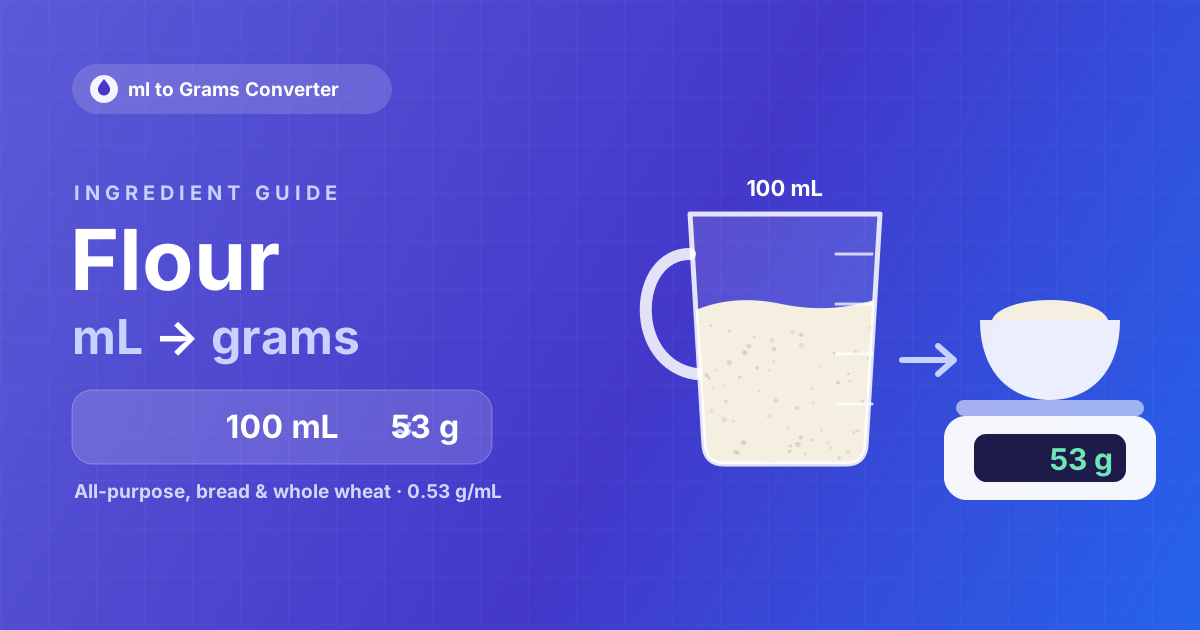
Spooned into a measure and leveled, flour weighs about 0.53 g/mL, so 100 mL of all-purpose flour is roughly 53 g. The same 0.53 g/mL figure applies to bread flour and whole wheat flour in this site’s converter. Scoop the measure straight through the bag instead and the flour packs down, pushing that same 100 mL up toward 60 g.
Put simply, a milliliter of flour weighs about half a gram, not one gram. Flour is fine powder with a lot of air between the particles, so its volume and its weight drift apart quickly. How you fill the measure changes the result more than which bag of flour you opened.
Flour mL to grams chart (5 to 500 mL)
The chart assumes flour spooned lightly into the measure and leveled with a straight edge, with no tapping or pressing. At that packing, flour weighs about 0.53 g/mL. This is the exact value the site’s converter uses for All Purpose Flour, Bread Flour and Whole Wheat Flour, so these figures match what the calculator returns once rounded for kitchen use.
| Volume (mL) | Flour (g) |
|---|---|
| 5 mL | 2.7 g |
| 10 mL | 5.3 g |
| 15 mL | 8 g |
| 30 mL | 15.9 g |
| 50 mL | 27 g |
| 60 mL | 32 g |
| 75 mL | 40 g |
| 100 mL | 53 g |
| 125 mL | 66 g |
| 150 mL | 80 g |
| 175 mL | 93 g |
| 200 mL | 106 g |
| 240 mL | 127 g |
| 250 mL | 133 g |
| 300 mL | 159 g |
| 350 mL | 186 g |
| 400 mL | 212 g |
| 450 mL | 239 g |
| 500 mL | 265 g |
Weights are rounded to one decimal place below 20 g and to whole grams above that. Read them as practical estimates. Two careful bakers filling the same jug will rarely land on an identical number, and a gram or two either way makes no difference to most recipes.
How to convert flour mL to grams
The conversion is a single multiplication: grams = mL × density. For spooned and leveled flour, multiply the volume by 0.53.
200 mL × 0.53 g/mL = 106 g
To go the other way, divide: mL = grams ÷ 0.53. For any volume that is not in the chart, enter the amount and select All Purpose Flour, Bread Flour or Whole Wheat Flour in the mL to Grams Converter. All three options use the same 0.53 g/mL value, so you get the same answer whichever one you choose.
Why the measuring method matters more than the flour type
Most flour conversions give one number and stop there. The catch is that flour compresses. A measure pushed into a full bag and swept level can hold a lot more flour than one filled gently with a spoon, and that gap is larger than the difference between most wheat flours.
Reliable baking references use three filling methods, each with its own density:
- Fluffed and lightly spooned (about 0.51 g/mL). Stir the flour in its container to loosen it, spoon it into the measure without shaking, then level the top. King Arthur Baking bases its ingredient weights on this method.
- Spooned and leveled (about 0.53 g/mL). Spoon flour straight into the measure and scrape off the excess. This is the converter’s value and sits between the other two.
- Dip and sweep (about 0.6 g/mL). Push the measure into the flour, lift it out heaped and sweep the top flat. America’s Test Kitchen writes its recipes this way.
The same volume, measured three ways
The table below applies each density to the same set of volumes.
| Volume (mL) | Lightly spooned, 0.51 (g) | Spooned and leveled, 0.53 (g) | Scooped, 0.60 (g) |
|---|---|---|---|
| 50 mL | 26 g | 27 g | 30 g |
| 100 mL | 51 g | 53 g | 60 g |
| 125 mL | 64 g | 66 g | 75 g |
| 240 mL | 122 g | 127 g | 144 g |
| 250 mL | 128 g | 133 g | 150 g |
| 500 mL | 255 g | 265 g | 300 g |
At US cup size, the result runs from about 122 g for fluffed flour to about 144 g for scooped flour. America’s Test Kitchen notes that the measuring method alone can change the weight of a cup of flour by up to about 20%. King Arthur Baking goes further and says a truly compacted cup of all-purpose flour can hold up to 160 g.
One cup of extra-heavy flour in a batch of cookies is forgivable. Three or four cups of it in a cake or a loaf is how you end up with a dry crumb and a dough that fights back. So before converting, work out how the recipe writer measured. If the recipe says “spooned and leveled”, use the main chart. If it comes from a source that dips and sweeps, the scooped column is closer. When there is no clue at all, 0.53 g/mL is a sensible middle estimate.
All-purpose, bread and whole wheat flour compared
Flour type does make some difference. Bread flour is higher in protein, and whole wheat flour contains the bran and germ of the grain. Both are sold coarser or finer depending on the brand, which changes how the particles settle in a cup. Even so, when you line up published cup weights, the sources disagree with each other by more than the flour types differ.
Here is what four widely used references list for one US cup (236.6 mL) of each flour:
| Source and method | All-purpose | Bread flour | Whole wheat |
|---|---|---|---|
| USDA FoodData Central (1 cup) | 125 g | 137 g | 120 g |
| King Arthur Baking (fluff, spoon, level) | 120 g | 120 g | 113 g |
| Bob’s Red Mill (spoon and level) | 136 g | 144 g | 152 g |
| America’s Test Kitchen (dip and sweep) | 142 g | not listed | not listed |
Read each row with its method in mind. King Arthur fluffs the flour first, so its numbers run lightest. America’s Test Kitchen dips and sweeps, so its all-purpose figure runs heaviest. Bob’s Red Mill uses spoon and level but still lists heavier cups than USDA, which shows how much individual technique and milling can move the result.
All-purpose flour
All-purpose flour is the best documented of the three. USDA FoodData Central lists one cup at 125 g, which is almost exactly the converter’s 0.53 g/mL. King Arthur’s lighter method gives 120 g, Bob’s Red Mill lists 136 g, and the America’s Test Kitchen dip-and-sweep cup comes in at about 142 g.
The converter value sits right beside the USDA figure and between the light and heavy methods. For everyday cooking and baking, 0.53 g/mL, or about 127 g per 240 mL US cup, is a dependable working number.
Bread flour
Bread flour shows the widest spread. USDA lists 137 g per cup, King Arthur 120 g, and Bob’s Red Mill 144 g for its artisan bread flour. America’s Test Kitchen does not give a separate bread flour figure. The converter uses 0.53 g/mL, the same as all-purpose. That is lower than the USDA figure but inside the published range.
Bread recipes are sensitive to the balance of flour and water, because that balance decides how the dough feels and handles. If a bread recipe gives flour in grams, weigh it. If it gives cups and you have to convert, the spooned figure is a fair start, and it is easier to add a little flour to a sticky dough than to rescue one that has turned stiff.
Whole wheat flour
Whole wheat flour runs the other way. USDA lists whole-grain wheat flour at 120 g per cup and King Arthur at 113 g, both lighter than their all-purpose figures. Bob’s Red Mill, by contrast, lists 152 g, the heaviest number in the whole table.
The converter’s 0.53 g/mL is on the high side compared with USDA and King Arthur, and well under Bob’s Red Mill. Coarseness varies from mill to mill, and bran particles do not settle the same way as white flour, so no single cup weight has become the agreed standard. That makes a scale more useful with whole wheat flour than with any other everyday flour.
Flour in teaspoons, tablespoons and cups
Many recipes measure flour by spoon or cup rather than in milliliters. The table uses the site’s standard sizes: a 5 mL teaspoon, a 15 mL tablespoon, a 240 mL US cup and a 250 mL metric cup, all at 0.53 g/mL.
| Measure | Flour (g) |
|---|---|
| 1 teaspoon (5 mL) | 2.7 g |
| 1 tablespoon (15 mL) | 8 g |
| 2 tablespoons (30 mL) | 15.9 g |
| 1/4 cup (60 mL) | 32 g |
| 1/3 cup (80 mL) | 42 g |
| 1/2 cup (120 mL) | 64 g |
| 2/3 cup (160 mL) | 85 g |
| 3/4 cup (180 mL) | 95 g |
| 1 US cup (240 mL) | 127 g |
| 1 metric cup (250 mL) | 133 g |
The US cup and the metric cup are close: 127 g against 133 g of flour. For one cup the difference hardly matters, but across three or four cups it starts to add up, so check which cup size your recipe was written for.
Small spoon amounts deserve a little care too. A tablespoon of flour is about 8 g when leveled, a common amount for thickening a pan sauce or dusting a work surface. A heaped tablespoon can easily hold more. If you are thickening with starch rather than flour, the cornstarch mL to grams chart has its own figures, because cornstarch has a different density.
Worked examples
Each example uses the multiplication from the conversion section. Round the result to the nearest gram when you weigh.
A metric recipe calling for 375 mL of all-purpose flour
375 mL × 0.53 g/mL = about 199 g
Weigh out 199 g and you are as close as the volume measure allows. The same flour scooped would come in heavier, so if the recipe writer is known to dip and sweep, expect the dough to need a bit more flour than this.
Bread flour for a loaf, filled two different ways
A loaf recipe asks for 750 mL of bread flour. Spooned and leveled:
750 mL × 0.53 g/mL = about 398 g
Scooped straight from the bag:
750 mL × 0.6 g/mL = 450 g
Same jug, same flour, and the scooped version packs in noticeably more. That is enough to turn a soft, easy dough into a stiff one, which is why bread bakers who care about consistency weigh their flour.
Three-quarters of a cup of whole wheat flour
A muffin recipe calls for 3/4 cup (180 mL) of whole wheat flour.
180 mL × 0.53 g/mL = about 95 g
With the lighter fluff-and-spoon method, 180 mL × 0.51 g/mL = about 92 g. At small volumes like this the methods stay close together. The gap only becomes a problem once the amounts get larger.
Converting flour grams back to mL
Recipes written by weight are easy to follow with a scale. Without one, divide the weight by the density: mL = grams ÷ 0.53. The table gives common weights at the spooned and leveled value.
| Weight (g) | Flour (mL) |
|---|---|
| 25 g | 47 mL |
| 50 g | 94 mL |
| 100 g | 189 mL |
| 125 g | 236 mL |
| 150 g | 283 mL |
| 200 g | 377 mL |
| 250 g | 472 mL |
| 300 g | 566 mL |
| 400 g | 755 mL |
| 500 g | 943 mL |
| 1,000 g | 1,887 mL |
A few examples show how the reverse conversion plays out in practice.
- A recipe lists 250 g of flour and you only have a jug.
250 g ÷ 0.53 g/mL = about 472 mL, spooned into the jug and leveled. - A recipe gives “1 cup (120 g)”. At the converter’s density,
120 g ÷ 0.53 g/mL = about 226 mL. With King Arthur’s fluffed method,120 g ÷ 0.51 g/mL = about 235 mL, which is almost exactly one US cup. So when a recipe pairs one cup with 120 g, it expects light, fluffed flour, and you should measure gently. - A whole 1 kg bag.
1,000 g ÷ 0.53 g/mL = about 1,887 mLof spooned flour.
Packing works in reverse, too. Scooped flour holds more weight in every milliliter, so you need less volume to reach the same weight: 100 g of flour takes about 189 mL spooned but only about 167 mL scooped. If you are converting grams into cups for someone who always dips and sweeps, the smaller volume will get them closer to the recipe.
How to measure flour accurately
A kitchen scale is the most accurate tool for flour, by a wide margin. It ignores packing, settling and sifting completely, because 100 g is 100 g however the flour sits in the bowl. Set the bowl on the scale, press tare, and add flour until the display reads what the recipe wants. For bread, cakes and pastry, where flour controls texture, a scale pays for itself quickly.
When you have to measure by volume, these habits keep you close to the chart:
- Loosen the flour first. Flour settles in the bag or canister during storage. Stir it with a spoon or whisk before measuring so you are not starting with a compacted layer.
- Spoon, do not scoop. Spoon flour into the measure until it mounds over the top. Pushing the cup into the bag compresses the flour and raises its weight per mL.
- Level with a straight edge. Sweep the back of a knife across the rim. Do not tap the cup on the counter or press the flour down, as both pack it tighter.
- Use dry measuring cups for flour. A flat-rimmed cup is easy to level. A liquid jug is not, and flour mounded in a jug is hard to read against the markings.
- Read the sifting instruction carefully. “1 cup sifted flour” means sift first and then measure, which gives a lighter cup than the chart. “1 cup flour, sifted” means measure first and sift afterwards, so the chart applies.
- Stay consistent. Whatever method you use, use it for every cup in the recipe. Mixing a scooped cup with a spooned one adds error you cannot see.
Other baking staples have their own densities and packing quirks. The sugar mL to grams guide covers granulated, brown and powdered sugar, and the cocoa powder mL to grams chart shows how much lighter cocoa is than flour by volume.
Enter your exact volume and select All Purpose Flour in the mL to Grams Converter to calculate any amount not listed in the charts above.
Frequently asked questions
How many grams is 100 mL of flour?
About 53 g, if the flour is spooned into the measure and leveled. Scooped straight from the bag, the same 100 mL can weigh closer to 60 g because the flour is compressed.
Is 250 mL of flour 250 grams?
No. Spooned and leveled, 250 mL of flour weighs about 133 g, roughly half as much. Milliliters and grams only line up for ingredients with a density close to 1 g/mL, such as water, and flour is far lighter than that.
How do I convert flour grams back to mL?
Divide the weight in grams by 0.53 to get milliliters of spooned and leveled flour. For example, 100 g of flour is about 189 mL, and 500 g is about 943 mL.
Does flour type change the conversion?
Only a little in practice. The converter uses 0.53 g/mL for all-purpose, bread and whole wheat flour, and published cup weights for each type vary more between sources and measuring methods than between the flours themselves.
How can I measure flour accurately without a scale?
Stir the flour to loosen it, spoon it into a dry measuring cup until it mounds, then level the top with a straight edge. Avoid scooping, tapping or pressing, since each one packs extra flour into the cup.